In Harmony with Nature: How Our Farming Families Care for the Land
Hedgerows, clover, soil tests and 300 grazing days. The unglamorous, everyday work of farming in a way the next generation can inherit.

Declan Moore
Farm & Heritage Correspondent
Ask a farmer about sustainability and you tend to get a slightly flat look. Not because they don't care — in my experience they care more than almost anybody — but because the word has been used so loosely for so long that it has stopped meaning very much. What they will talk about, at length and with real enthusiasm, is soil.
It always comes back to the soil
Grass-based dairy farming is, in the end, a soil business. Healthy soil grows more grass, more grass means less bought-in feed, less bought-in feed means lower costs and a lower carbon footprint. The economics and the ecology point in the same direction, which is a rarer thing in agriculture than you'd hope.
So the farms in our co-operative test their soils regularly — pH, phosphorus, potassium, organic matter — and apply nutrients where the results say they're needed rather than blanket-spreading across the whole holding. It sounds like a small administrative change. In practice it has cut chemical nitrogen use substantially on farms that have taken it seriously, while growing the same amount of grass or more.
Clover, doing the work for free
The other lever is clover. White clover fixes nitrogen from the air into the soil through nodules on its roots, effectively fertilising the sward for nothing. Reseeding pastures with grass and clover mixes has become standard practice across the membership, and multi-species swards — adding plantain, chicory and vetches — are spreading fast on the more experimental farms.
There's a secondary benefit that farmers noticed before the researchers confirmed it: deeper-rooting multi-species swards hold up better in a dry summer, which matters more with every passing year.
Cows outdoors, which is the point
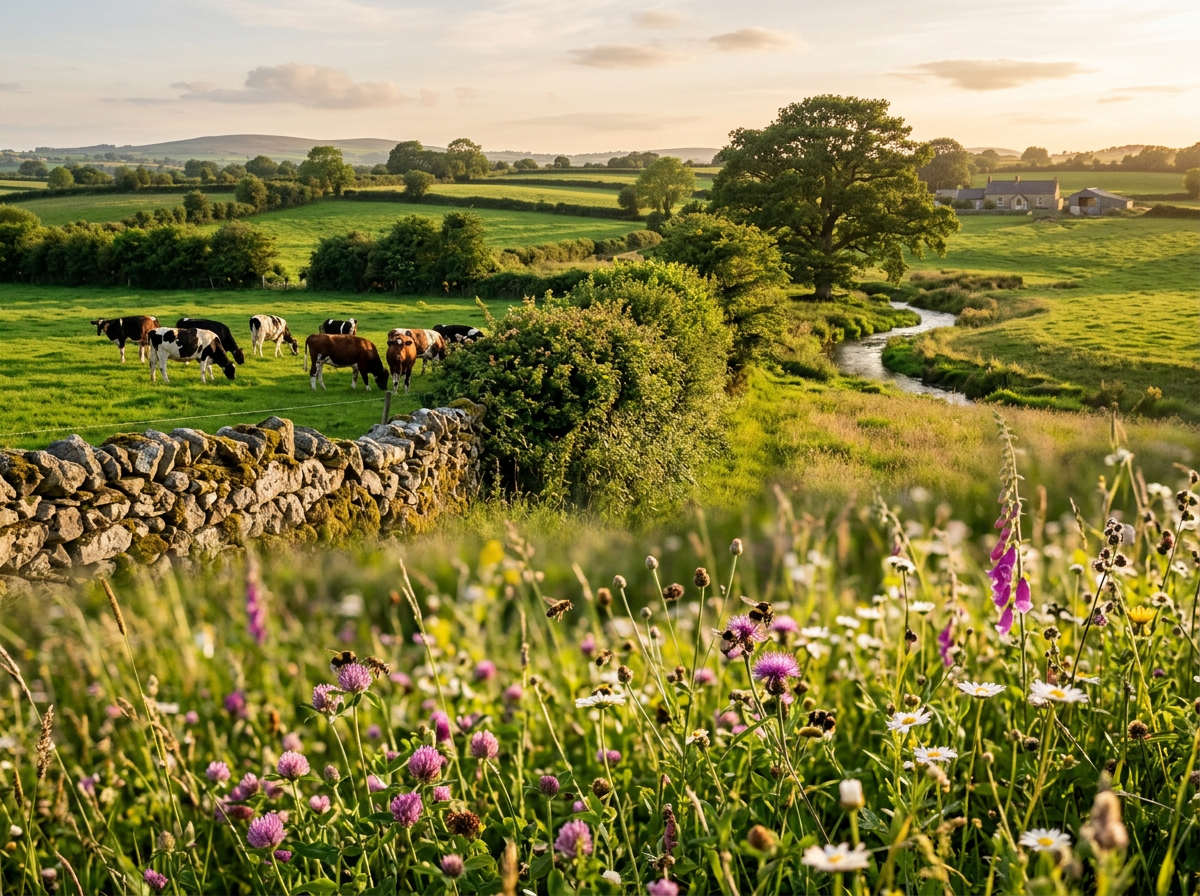
Ireland's mild, wet climate lets our herds graze outdoors for up to 300 days a year. That figure is among the highest in the world, and it underpins everything else.
Grazing animals spread their own manure, so less slurry needs storing and spreading mechanically. They exercise naturally, which supports hoof and udder health. Their diet is overwhelmingly the thing their digestive systems evolved for. And a grass-based system produces milk with a markedly lower carbon footprint per litre than intensive housed systems reliant on imported feed.
Rotational grazing is how it's managed in practice — paddock by paddock, one or two days on, three weeks or more resting. The grass recovers fully before the herd returns, the roots stay deep, and the soil structure stays intact.
Hedgerows and the edges of fields
The parts of a farm that produce nothing are increasingly the parts under most scrutiny, and rightly. Ireland's hedgerow network is one of the densest in Europe and functions as a national wildlife corridor — nesting habitat for birds, forage for pollinators, shelter for the herd, and a meaningful carbon store in its own right.
Our farmers are trimming hedges on longer rotations rather than annually, leaving whitethorn and blackthorn to flower and fruit, and planting up gaps. Watercourses are fenced off so cattle can't poach the banks, with buffer strips left uncut alongside. On many holdings there are corners deliberately left rough for ground-nesting birds.
Minding the herd
Animal welfare is audited independently rather than self-declared: herd health planning with a named vet, responsible and recorded antibiotic use, lameness and mobility scoring, calf housing standards, and clear protocols for transport and handling.
The co-operative structure matters here in a way that's easy to underestimate. These standards are set and enforced by farmers who are subject to them on their own farms the following morning. Nobody is writing rules for somebody else's yard.
The generational test
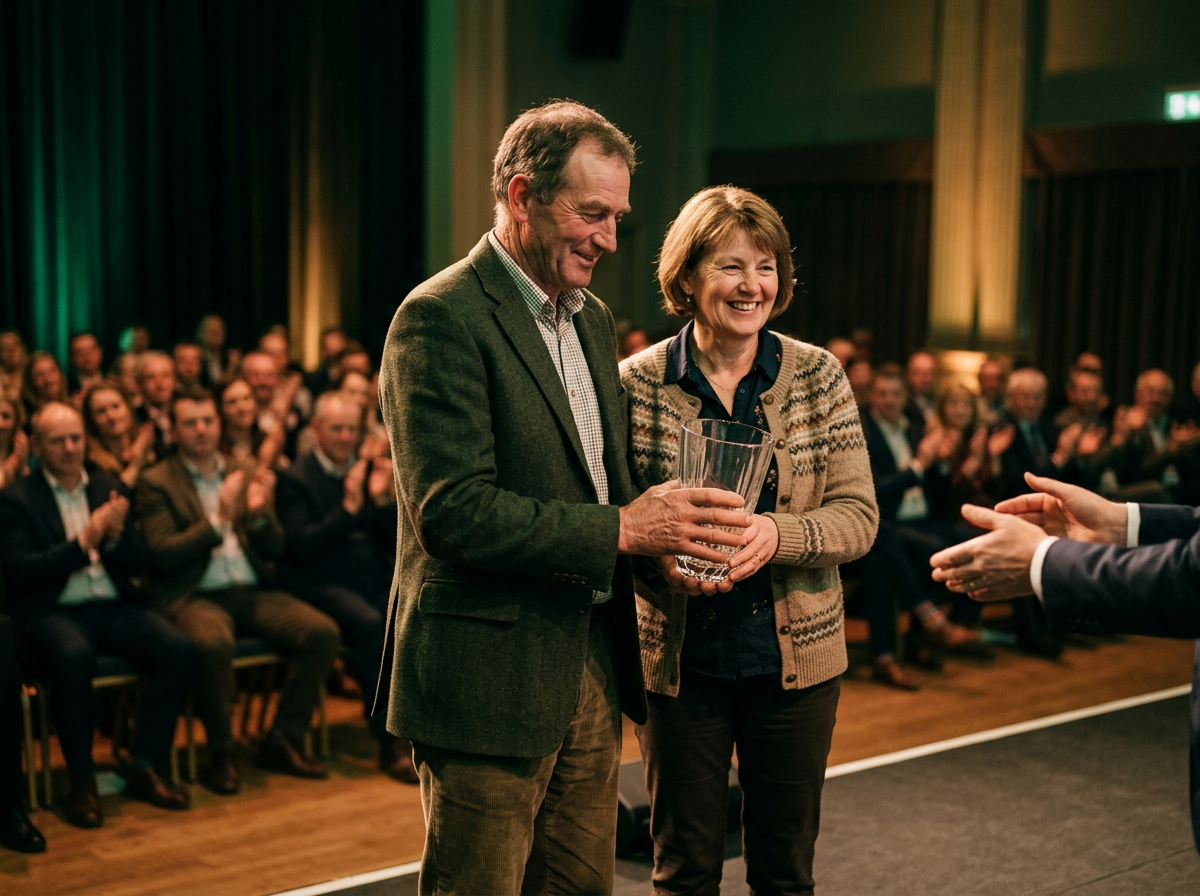
Every farmer I've interviewed over twenty years applies the same private measure, whatever language they use for it. Will this ground be in better condition when I hand it over than when I took it on?
It's a longer time horizon than most industries ever work to, and it explains a lot about how these decisions get made. Farms that have been in the same family since the 1940s and 50s aren't optimising for a quarterly result. They're trying not to be the generation that broke something.
That, more than any certification mark, is what in harmony with nature actually means around here. It's slow, it's largely invisible from a supermarket aisle, and it's the reason there's still grass worth grazing.
Written by
Declan Moore
Farm & Heritage Correspondent
Declan Moore has spent the better part of twenty years writing about Irish agriculture — first for a regional paper in the west, later for national farming titles, and now for Kerrygold. He has stood in more milking parlours at half five in the morning than he cares to count, and he still finds the work fascinating.
His beat is the 14,000 farming families behind the gold foil: how they manage grass, how they mind their herds, how a farm passes from one generation to the next without losing its character. He writes about heritage too — the adverts, the packaging, the small design decisions that turned a co-operative export brand into something people keep in the butter dish. Declan lives in County Clare with two dogs and an unreliable Land Rover.