Our Farms
Fourteen thousand families, one co-operative
Small Irish holdings, most of them worked by the same family for three generations or more. They supply the milk, and between them they own the brand it becomes.
Where the milk comes from
Grass farmers who happen to keep cows
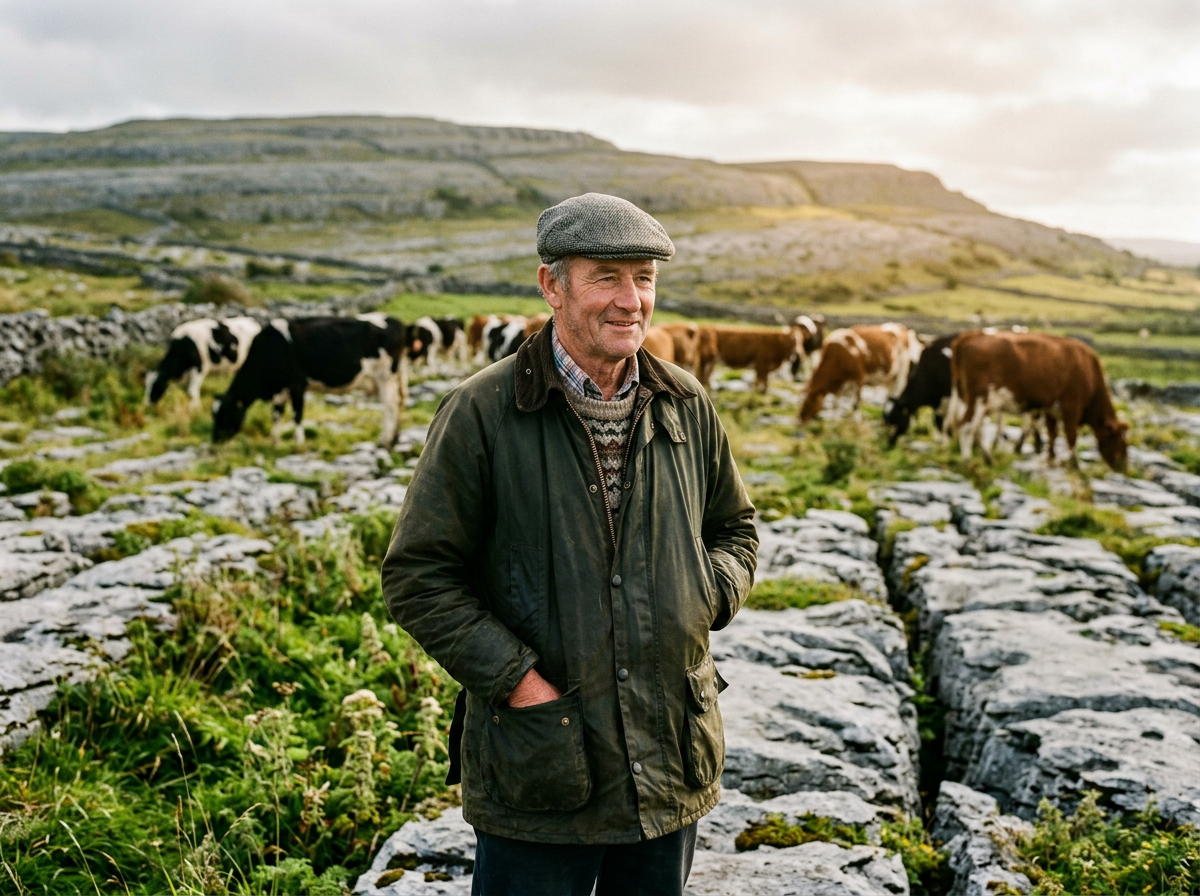
Ask one of our farmers what the job is and very few of them will say dairy farmer. The answer you tend to get is grass farmer. The cows, they will tell you, do the hard part — their own job is simply to have the right grass in front of the herd on the right day.
It sounds like a small distinction and it is the whole discipline. A typical farm is divided into thirty or more paddocks. Each is grazed for a day or two, then rested for three weeks or longer while it recovers. The farmer walks the entire holding weekly with a plate meter, measuring covers and writing the numbers down. Grass grazed at the right stage — leafy, before it runs to seed — carries far more sugar and beta-carotene, and that feeds straight through into butterfat.
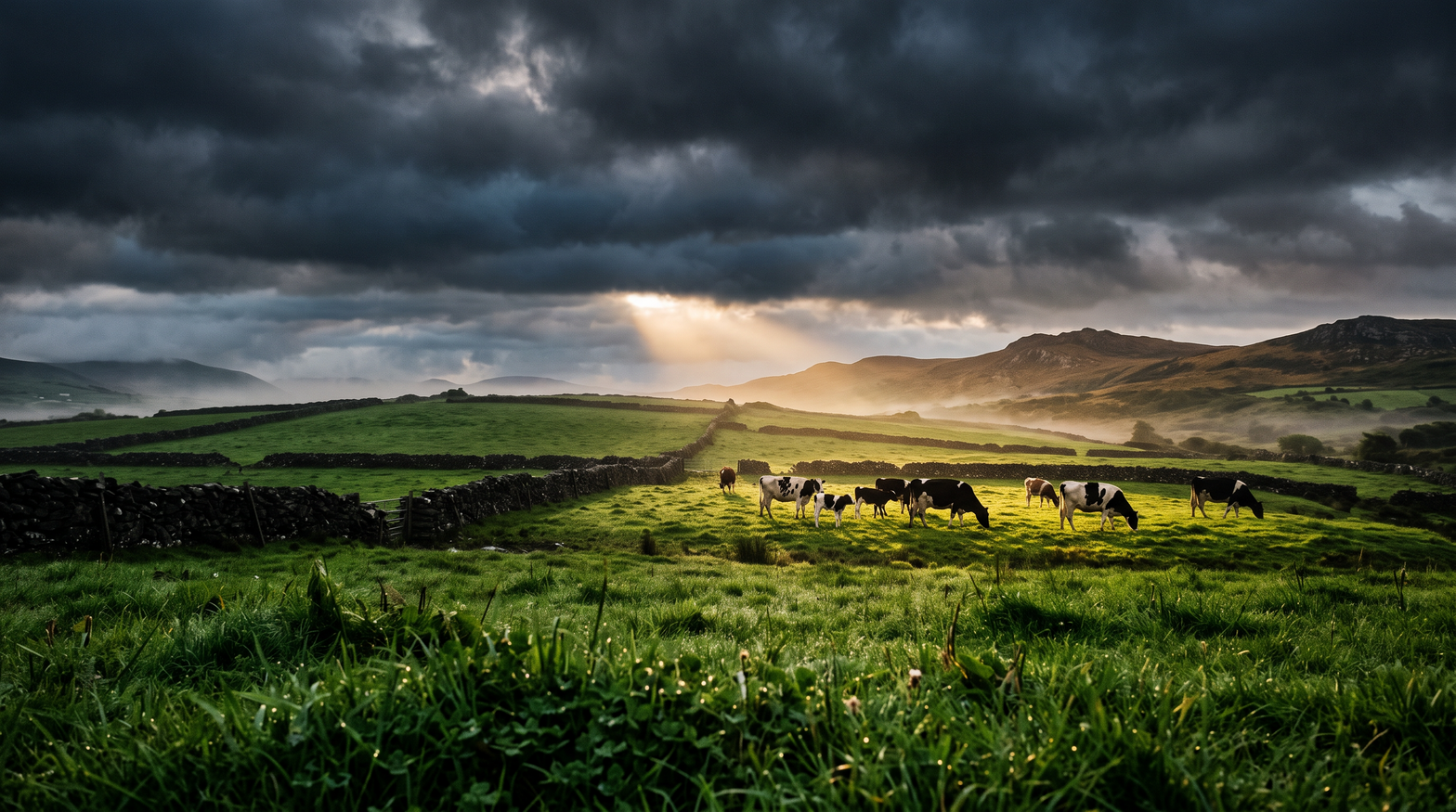
Ireland makes this possible in a way very few countries can. The Gulf Stream gives us mild winters and reliable rain, so grass grows here for most of the year and our herds stay outdoors for up to 300 days annually. That is among the highest figures anywhere in the world, and it is the foundation of everything else on this page.
Up to 300 days a year outdoors on grass
Among the highest grazing figures in world dairy. It is why the butter is golden, and why the carbon footprint of a litre of Irish grass-fed milk is lower than intensive housed systems.
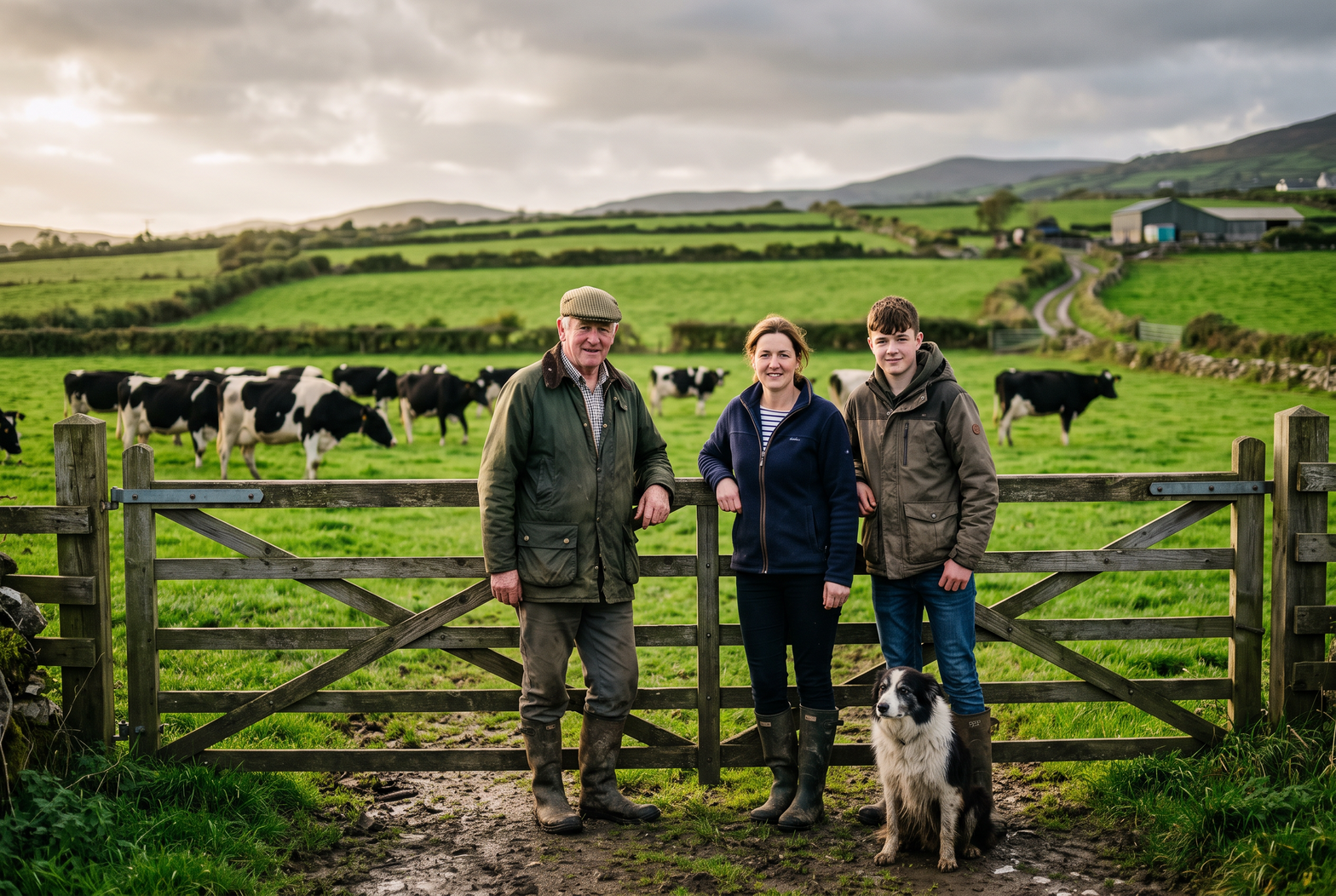
Most of our member farms have been in the same family since the 1940s or 50s.
Not suppliers to a company
Kerrygold belongs to a co-operative of around 14,000 Irish family farms. The farmers are not selling into a business at arm's length; they are members of a co-op that owns one.
It changes what standards mean in practice. Welfare protocols, grazing requirements, antibiotic policy and milk quality thresholds are agreed by people who will be audited against them in their own yard the following morning, in front of neighbours who know their figures perfectly well.
What gets checked, and by whom
Animal welfare on our member farms is independently audited rather than self-declared. Every holding works to a herd health plan agreed with a named vet, records and justifies antibiotic use, and scores animals regularly for lameness and mobility. Calf housing, handling facilities and transport arrangements all sit within the same framework.
Milk quality is assessed continuously rather than in snapshots. Somatic cell counts, total bacterial counts, thermoduric levels and residue testing are tracked across a full twelve months, so a single good spell counts for very little. Consistency through calving, bad weather and everything else a year throws up is the actual test.
Looking after the ground
Soil is tested regularly for pH, phosphorus, potassium and organic matter, and nutrients are applied where the results call for them rather than spread across the whole farm. White clover is now standard in reseeded swards because it fixes nitrogen out of the air, cutting the need for chemical fertiliser while growing as much grass or more. On the more experimental farms, multi-species swards with plantain and chicory are proving far more resilient through a dry summer.
At the edges of the fields, hedges are trimmed on longer rotations so whitethorn and blackthorn get to flower and fruit. Watercourses are fenced against poaching, buffer strips are left uncut, and rough corners are set aside for ground-nesting birds. Ireland has one of the densest hedgerow networks in Europe and on our farms it is treated as infrastructure, not untidiness.