Meet Thomas Mahon: Three Generations Farming the Burren
On sixty hectares of limestone and green in County Clare, one family has been minding the same land — and the same herd line — since 1953.
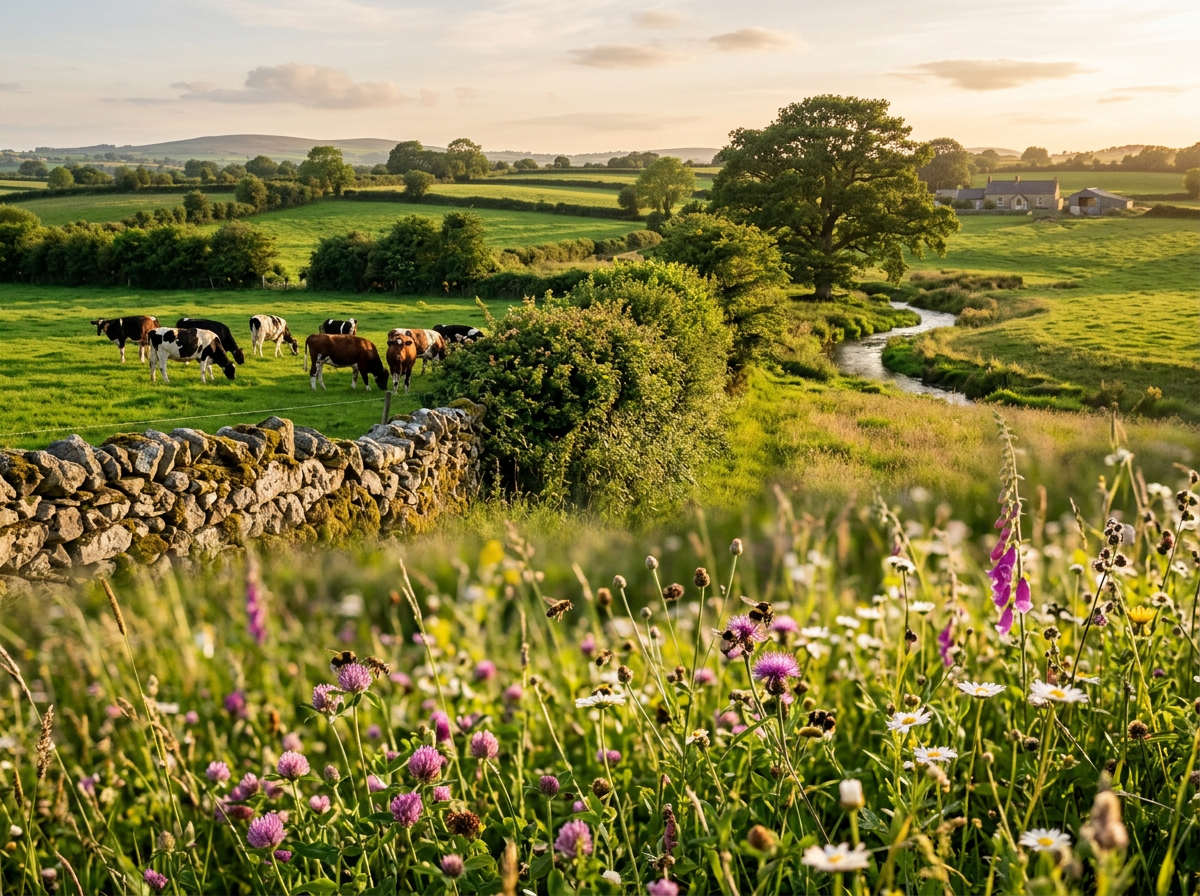
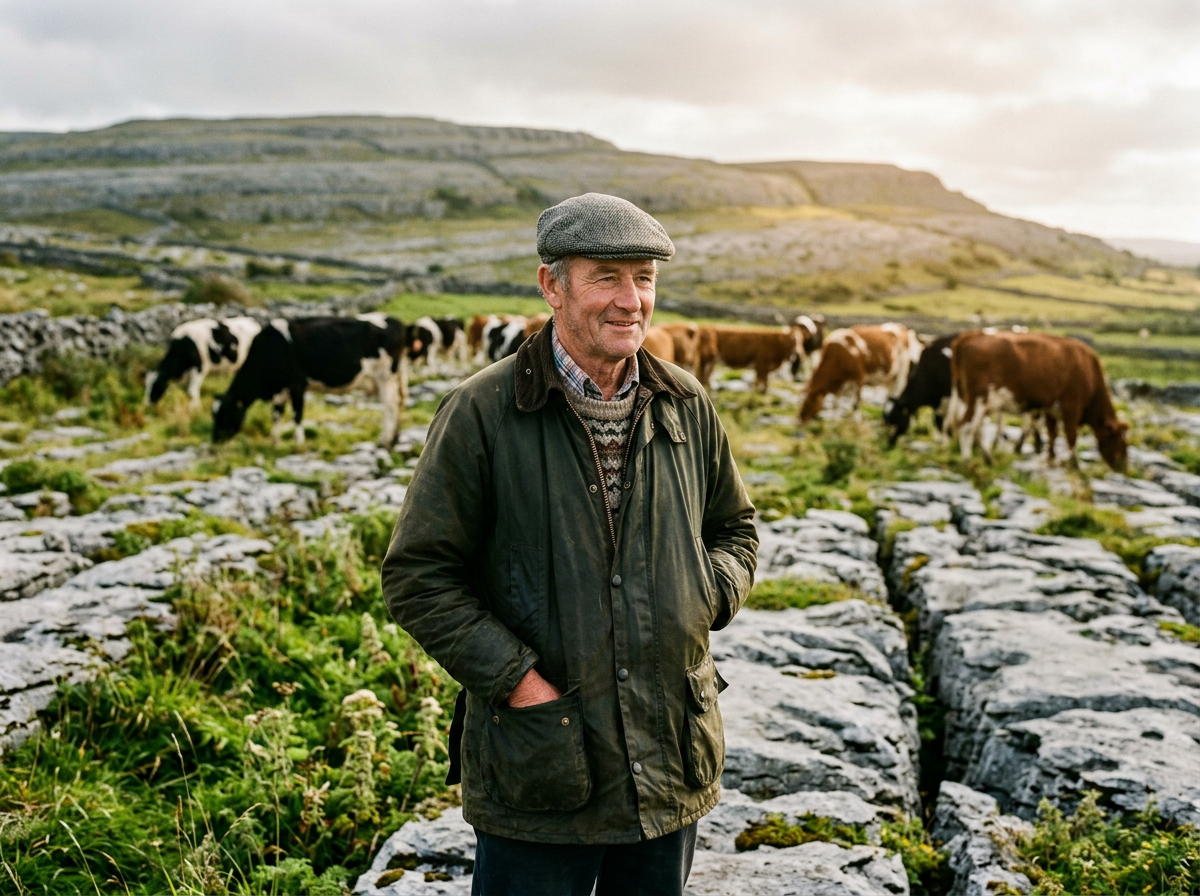
The road to Thomas Mahon's farm narrows twice before it gives up on being a road at all. On the last stretch the hedgerows close in overhead and you drive through a green tunnel, and then it opens out and you're looking at the Burren — grey limestone pavement stitched with impossible ribbons of grass, dry-stone walls running off in every direction, and the Atlantic doing something dramatic in the distance.
"People see the rock and assume nothing grows," Thomas says, leaning on a gate. "It's the opposite. The stone holds the day's heat and lets it back out at night. We get grass here in February when farms on better ground are still waiting."
Since 1953, and not by accident
The Mahons have milked on this land for three generations. Thomas's grandfather Patrick took the holding on in 1953 and joined the co-operative when it was still a local creamery with a cart and a set of scales. His father Michael ran it through the difficult seventies and the quota years. Thomas took over in 2011, at thirty-one, after a decade away working in agricultural engineering in Galway.
"I'd every intention of not coming back," he says, cheerfully. "That lasted until I had a desk."
He milks 82 cows now — a mix of Holstein Friesian and British Friesian, with a line of Shorthorn genetics that Michael was fond of and Thomas has never quite been willing to breed out. The herd goes out to grass in mid-February most years and stays out until early December.
Grass first, everything else after
Ask Thomas what his job is and he won't say dairy farmer. He'll say grass farmer.
"The cows do the hard part. My job is to have the right grass in front of them on the right day." The farm is divided into 34 paddocks. Each one is grazed for a day, sometimes two, then rested for three weeks or more while it recovers. He walks the whole farm every week with a plate meter, measuring covers, writing the numbers in a notebook that lives in the glovebox of the Land Rover because, he says, phones die in the rain.
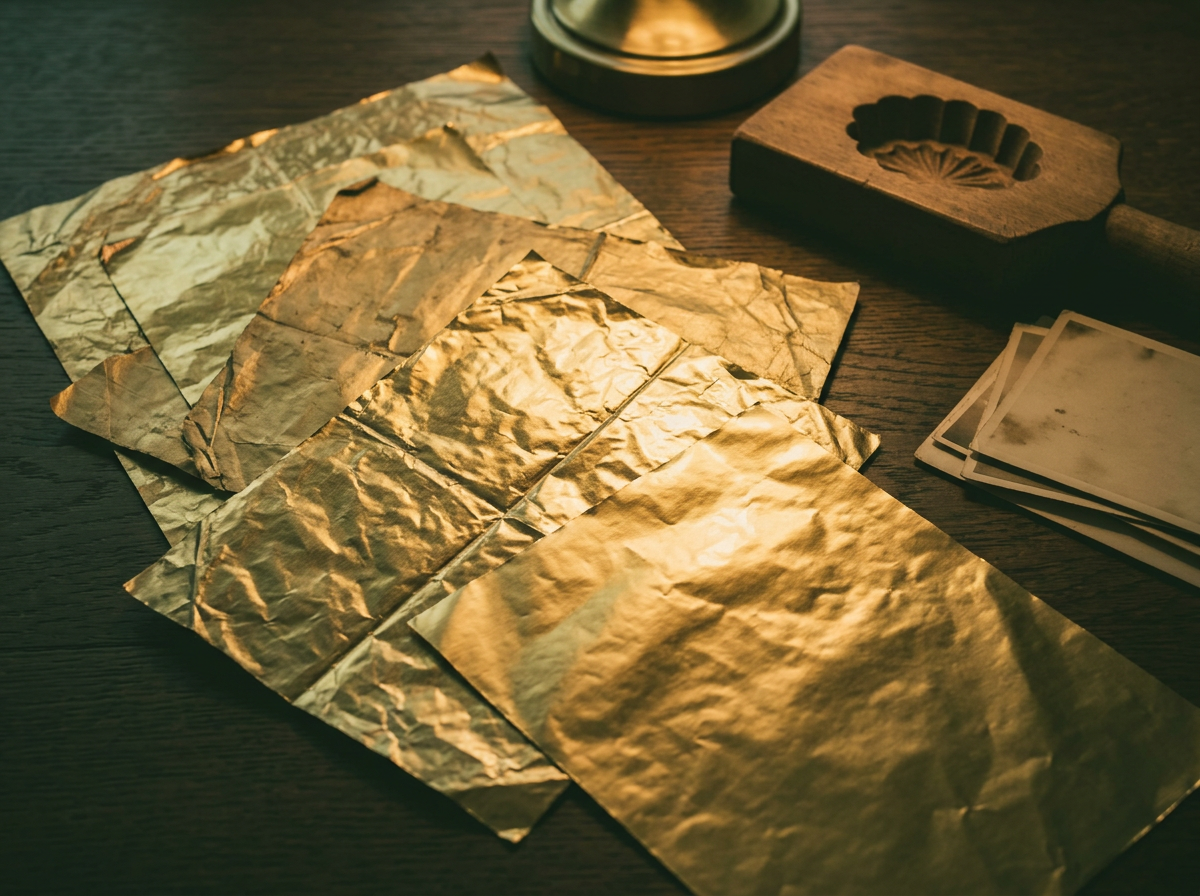
It's an unglamorous discipline and it is the reason the milk is what it is. Grass grazed at the right stage — leafy, before it goes to seed — is far richer in sugars and beta-carotene. That feeds straight through into butterfat, and butterfat is what ends up in the foil.
The co-operative, explained over tea
Inside, at the kitchen table, Thomas explains the ownership structure in about four sentences, which is more than most people manage.
"We're not suppliers to a company. We're members of a co-op that owns the company. Fourteen thousand families, all in the same boat. When the brand does well, that comes back down the line to us. When there's a decision made about standards or welfare, it's made by people who'll have to live with it in their own yard the next morning."
He's blunt about what that changes in practice. Animal welfare standards, grazing days, antibiotic use, milk quality testing — all of it is audited, and all of it is set by farmers who are themselves audited. "You can't hide from your neighbours," he says. "Everyone knows everyone's figures."
The Burren way
The farm carries obligations that have nothing to do with milk. Parts of the holding are designated conservation ground, home to orchids and gentians that grow nowhere else in Ireland in that combination. Thomas manages 11 hectares under a habitat scheme — grazing it lightly in the winter months, which is the traditional Burren practice known as winterage, and keeping cattle off it entirely in spring while the flowers set seed.
"The stone walls, the winterage, the flowers — that's five thousand years of people working this ground out. I'm not going to be the one who breaks it."
The fourth generation, possibly
His daughter Aoife is fourteen and has firm opinions about calf-rearing and no opinions at all, yet, about her future. His son Cormac is nine and follows the vet around like a shadow.
"I won't push either of them," Thomas says. "My father never pushed me and look how that worked out. But I'll leave it in better order than I got it. Better grass, better walls, better herd. If they want it, it'll be worth having."
Out in the yard, the evening milking is starting. The cows come in off the limestone in their own time, single file along a track their great-grandmothers wore into the ground, and the light goes gold over the walls, and the whole thing looks so much like an advert that it feels slightly rude to point it out.
Written by
Declan Moore
Farm & Heritage Correspondent
Declan Moore has spent the better part of twenty years writing about Irish agriculture — first for a regional paper in the west, later for national farming titles, and now for Kerrygold. He has stood in more milking parlours at half five in the morning than he cares to count, and he still finds the work fascinating.
His beat is the 14,000 farming families behind the gold foil: how they manage grass, how they mind their herds, how a farm passes from one generation to the next without losing its character. He writes about heritage too — the adverts, the packaging, the small design decisions that turned a co-operative export brand into something people keep in the butter dish. Declan lives in County Clare with two dogs and an unreliable Land Rover.